

What Is Helichrysum? Discover Sardinia's Golden Flower
Helichrysum is a genus of flowering plants in the Asteraceae family. In Sardinian botanical traditions and skincare, the name most often refers to Helichrysum italicum, an aromatic Mediterranean plant also known as the “Golden Flower,” Immortelle, or the Everlasting Flower.
For us at Sarda Zone, Helichrysum is more than a skincare ingredient. Its golden flowers, silvery leaves, and unmistakable scent belong to a Sardinian landscape shaped by sun, wind, and sea. Before we included it in our formulas, it was already part of the everyday traditions and family knowledge that connect us to home.
If you are wondering what Helichrysum is, how it has traditionally been used, or what it may offer your skin, this guide will help you understand the plant and its different preparations. We will also show you what to look for in a Helichrysum formula, so you can choose one that suits your skin without relying on exaggerated claims.
What Is Helichrysum and Why Is It So Special?
Helichrysum is a diverse genus of flowering plants in the Asteraceae, or daisy, family. In Mediterranean botanical traditions and skincare, the name most often refers to Helichrysum italicum, an aromatic Mediterranean subshrub. Kew’s Plants of the World Online records Sardegna within its native range.
For us at Sarda Zone, Helichrysum is special because it connects a distinctive Mediterranean botanical with the traditions we grew up with in Sardinia. That relationship continues to guide how we bring Helichrysum into contemporary skincare.
Helichrysum also contains naturally occurring compounds, including flavonoids and terpenes, that have been studied for antioxidant and anti-inflammatory activity. At Sarda Zone, we value it as part of thoughtfully composed formulas designed to support skin comfort and everyday care, especially when your skin feels dry or exposed to environmental stress.
Why Is Helichrysum Called Immortelle?
Helichrysum is often called Immortelle or the Everlasting Flower because its papery flower heads can retain their form and color after drying. The name reflects one of the plant’s most visible qualities rather than a promise about longevity or health.
The botanical name is commonly connected to the Greek words helios, meaning sun, and chrysos, meaning gold, a fitting reference to its bright golden flowers. Helichrysum italicum is also sometimes called the curry plant because its aroma can recall curry-like herbs and spices. It is not the same plant as the curry leaf used in South Asian cooking.
These names tell us how people have experienced the plant: through its color, resilience, and scent. They also explain why Helichrysum has become such a recognizable symbol of the Mediterranean landscape.
What Does Helichrysum Look and Smell Like?
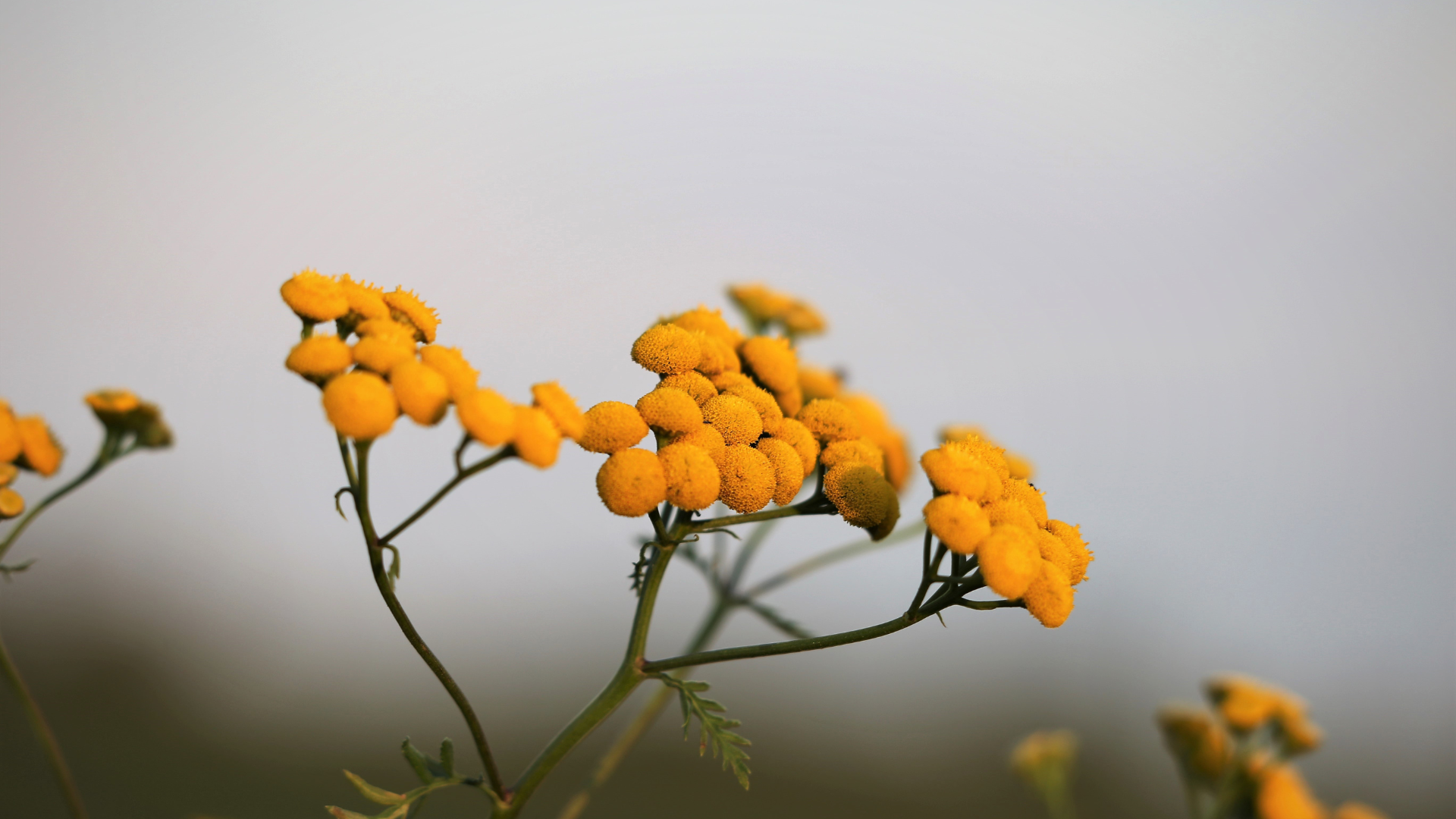
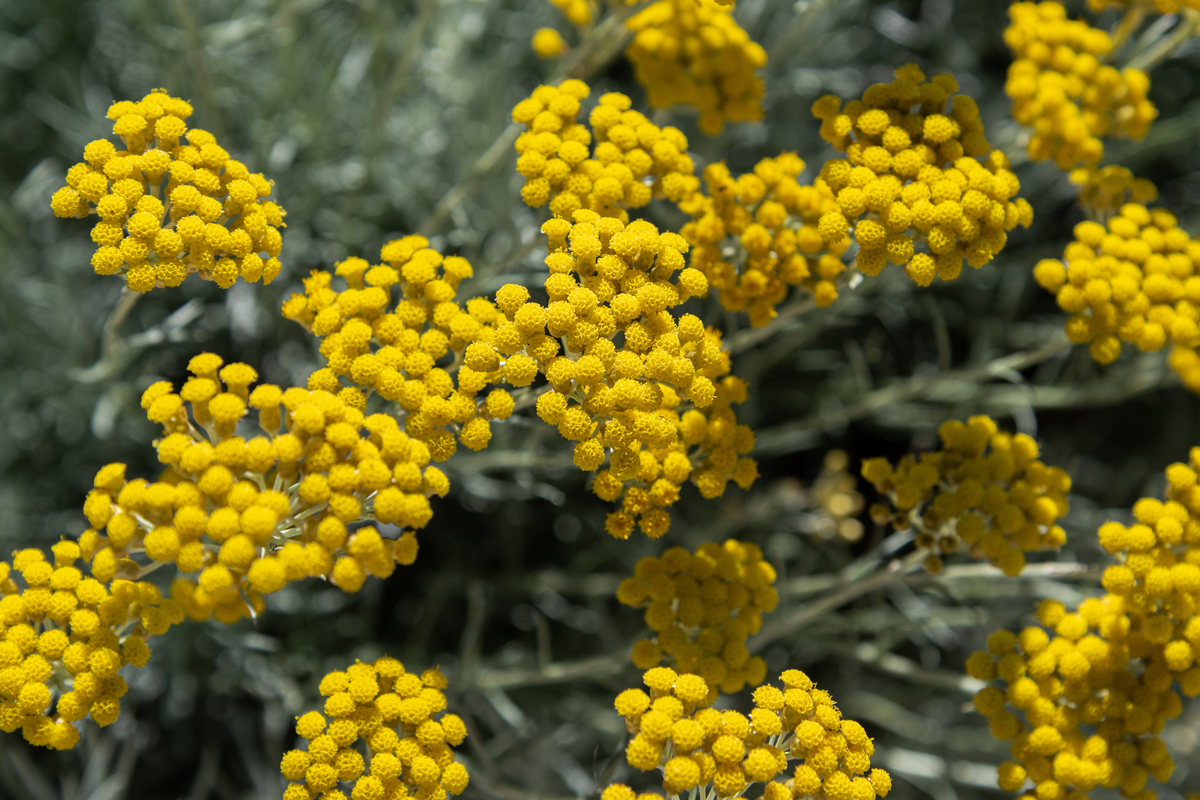
Helichrysum italicum grows as a compact, branching subshrub. It has slender, silver-green leaves and small golden-yellow flower heads arranged in dense clusters. The foliage helps give the plant its luminous appearance, even before it flowers.
Its scent is equally distinctive. It is often described as warm, dry, herbaceous, and slightly sweet, with earthy or curry-like notes. The aroma can vary with the plant’s origin, growing conditions, harvest, and how it's prepared. A fresh plant, dried flowers, hydrosol, and essential oil will not necessarily smell the same.
For many Sardinians, that fragrance is inseparable from place. It can evoke paths warmed by the sun, coastal wind, and wild Mediterranean vegetation. It is more than a perfume; it is a reminder of home.
Where Does Helichrysum Italicum Grow?
Helichrysum italicum is native to the Mediterranean region. Its recorded native range includes parts of Southern Europe and North Africa, as well as Mediterranean islands such as Sardinia, Corsica, Sicily, Cyprus, and the Balearic Islands.
The plant is associated with open, sunny environments and can thrive in demanding conditions: dry ground, strong light, and wind exposure. Those environmental qualities help explain its familiar presence in Mediterranean landscapes, but they should not be used to infer skincare effects. A plant’s resilience in nature is not clinical evidence that it will make human skin more resilient.
A Botanical Symbol of Sardinia
In Sardinia, Helichrysum is experienced as part of the landscape before it is encountered as an ingredient. Its golden flowers and aromatic foliage have become closely associated with the island’s sensory identity.
For our founder, Giulia Siffu, who was born and raised in Gallura, Helichrysum is connected to family knowledge and everyday care. That lived perspective gives us an authentic cultural relationship with the plant and shapes how we bring inherited botanical knowledge into contemporary skincare.
This connection is part of our Sardinian roots. We guide you between inherited botanical traditions and contemporary skincare while keeping your needs at the center.
How Has Helichrysum Traditionally Been Used?
Helichrysum italicum has a documented history of traditional use in Mediterranean Europe. People have prepared flowers and leaves in different ways, including dried preparations, infused oils, ointments, and other herbal applications.
A scientific review of H. italicum describes traditional uses reported in countries including Italy, Spain, Portugal and Bosnia and Herzegovina. These records help explain why the plant continues to attract scientific and cosmetic interest. They do not, however, prove that every traditional application is clinically effective.
That distinction is essential. “Traditionally used” describes cultural and historical practice. “Scientifically proven” requires appropriate studies in humans, using a clearly identified preparation and a relevant outcome. Helichrysum’s history deserves respect without turning inherited practice into an unsupported treatment claim.
What Forms of Helichrysum Are Used in Skincare?
Helichrysum can appear in skincare in several forms. The preparation method changes what it contains, how concentrated it is, and how it should be used. Research on one form should not be presented as proof for another.
Helichrysum Essential Oil
Helichrysum essential oil is a concentrated aromatic material obtained by distilling plant material, commonly the flowering tops. Its chemical profile can vary according to origin, harvest, and distillation conditions.
Because an essential oil is concentrated, it should not be confused with a finished face cream, body cream, or blended cosmetic oil. Pure essential-oil guidance also does not automatically apply to products that use a different Helichrysum preparation.
Helichrysum Hydrosol or Flower Water
Hydrosol, also called flower water, is the aromatic water associated with steam distillation. It contains water-compatible components and very small amounts of volatile material, giving it a composition quite different from the separated essential oil.
A hydrosol may be used as part of a cosmetic formula, but its properties depend on its quality, composition, and concentration within the finished product.
Helichrysum Extract
A Helichrysum extract is produced by drawing selected compounds from plant material into a solvent or carrier. There is no single universal “Helichrysum extract”: the plant part, solvent, and extraction method all influence the result.
A 2023 scientific review highlights how extraction and distillation techniques affect the compounds found in H. italicum preparations. The practical lesson is simple: ingredient identity and preparation matter more than a broad botanical reputation.
Helichrysum-Infused Oil
An infused or macerated oil is made by placing plant material in a carrier oil so that oil-compatible components move into the carrier over time. It is different from essential oil, even though both may casually be called “Helichrysum oil.”
When comparing products, check the ingredient list rather than relying on the name on the front of the bottle. It reveals whether the formula contains a flower extract, flower water, essential oil, or another preparation.
What Are the Potential Skin Benefits of Helichrysum?
Helichrysum italicum has a long traditional association with skin comfort, and early laboratory research has explored some of its compounds for antioxidant and anti-inflammatory activity. However, human research remains limited. You should therefore view Helichrysum as a supportive botanical skincare ingredient, not as a proven treatment for a skin condition.
For everyday skincare, the complete formula matters. Humectants, emollients, and other ingredients may contribute directly to hydration, softness, and comfort, while Helichrysum provides one part of the formulation. If you want to explore this narrower relationship, read Helichrysum and sensitive skin, but remember that the botanical is not a medical solution.
Is Helichrysum Safe for Skin?
Safety depends on the form of Helichrysum, its concentration, the complete formula, and the person using it. A pure essential oil, hydrosol, botanical extract, and finished cosmetic are different materials with different directions for use.
Follow the instructions supplied with the product rather than applying general essential-oil advice to every Helichrysum formula. When introducing a new cosmetic, a patch test on a small area can help identify an obvious reaction before broader use, although it cannot guarantee that irritation will never occur.
Stop using a product if it causes persistent redness, itching, or discomfort. Anyone managing an ongoing skin condition, known plant allergy, pregnancy-related concern, or medication question should seek guidance from an appropriate healthcare professional rather than relying on a general botanical article.
Helichrysum at Sarda Zone
At Sarda Zone, Helichrysum connects us to Sardinia. It reflects our respect for traditional botanical knowledge and our commitment to creating thoughtfully composed formulas for dry, sensitive, and reactive-feeling skin.
The form we use matters. Our Helichrysum Face Cream includes Helichrysum italicum flower water and extract. Our Body Cream uses flower extract, while our Body/Face Oil combines Helichrysum italicum flower extract with sweet almond oil and vitamin E. We create these as finished cosmetic formulations, not as bottles of pure Helichrysum essential oil.
By choosing each preparation intentionally, we can consider every product through its complete ingredient list and intended use. This helps us honor our Sardinian heritage while meeting modern expectations for accuracy, quality, and safety.
If you would like to see how we use Helichrysum across different formats, explore our Helichrysum skincare collection.
What to Remember About Helichrysum
Helichrysum is a diverse genus, while Helichrysum italicum is the Mediterranean species at the center of Sardinian tradition and Sarda Zone skincare. Its golden flowers, silver-green foliage, and warm herbal scent explain the names Immortelle and Everlasting Flower, as well as its close association with Mediterranean landscapes.
The plant can be prepared as essential oil, hydrosol, extract, or infused oil. Those forms are not interchangeable, and evidence from one should not be casually transferred to another. Traditional use and early research make H. italicum an interesting botanical, but many popular claims still lack robust human clinical evidence.
By distinguishing the plant from its different preparations and judging each product by its complete formula, you can choose Helichrysum skincare with more confidence. Consider its intended use and how your own skin responds. This helps you avoid mistaking traditional use or early research for medical proof. It also helps you find a formula that genuinely fits your needs.
Some ingredients are chosen.
For us, Helichrysum is part of who we are.
Written by Giulia Siffu
References
-
Royal Botanic Gardens, Kew. Helichrysum italicum (Roth) G.Don. Plants of the World Online. [cited 2026 Aug 31]. Available from: [Kew Science]
-
Viegas DA, Palmeira-de-Oliveira A, Salgueiro L, Martinez-de-Oliveira J, Palmeira-de-Oliveira R. Helichrysum italicum: from traditional use to scientific data. J Ethnopharmacol. 2014;151(1):54-65. doi: 10.1016/j.jep.2013.11.005. [DOI] [PubMed]
-
Furlan V, Bren U. Helichrysum italicum: from extraction, distillation, and encapsulation techniques to beneficial health effects. Foods. 2023;12(4):802. doi: 10.3390/foods12040802. [DOI] [PMC]

Commenta
Questo sito è protetto da hCaptcha e applica le Norme sulla privacy e i Termini di servizio di hCaptcha.