

Why Is Helichrysum Good for Sensitive Skin?
Sensitive skin can feel tight, dry, or easily unsettled, especially after weather changes, sun exposure, wind, pollution, or the use of unsuitable products. This is why gentle, well-designed skincare matters.
Helichrysum italicum is valued in skincare for its connection with skin comfort, antioxidant activity, and processes related to the skin barrier. Researchers have studied different Helichrysum oils, extracts, and naturally occurring compounds for these properties. In Sardinia, where the plant grows across dry, sunlit landscapes, Helichrysum also has a long connection with traditional everyday care.
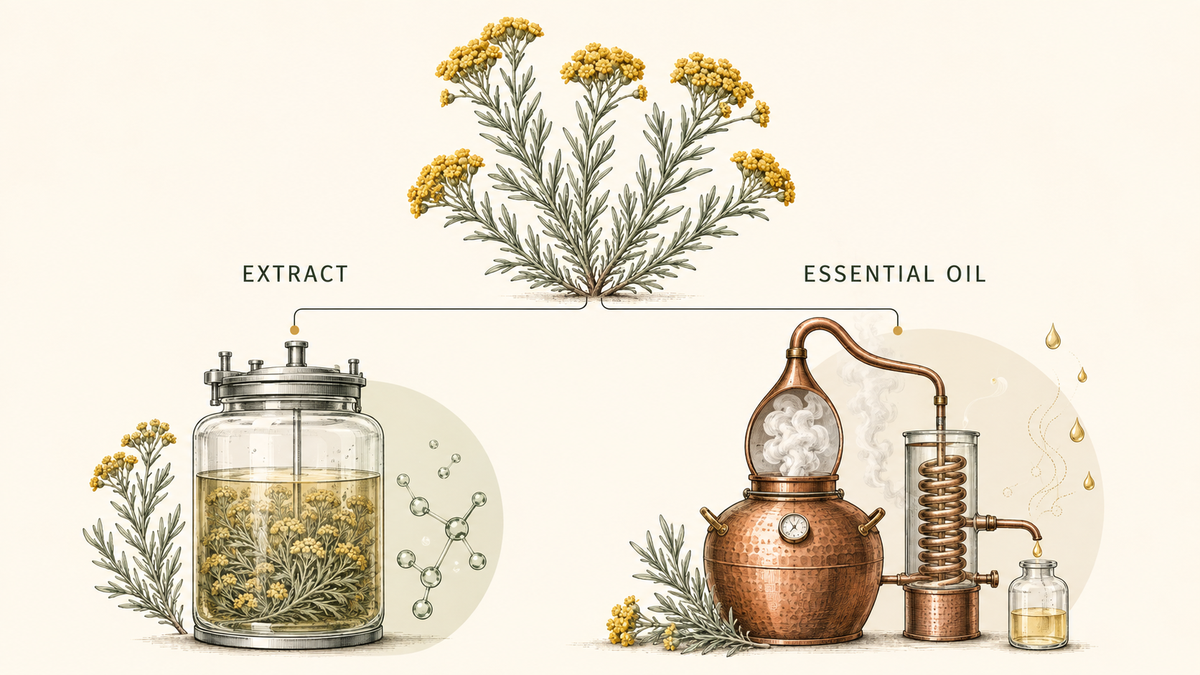
The exact preparation still matters. Helichrysum essential oil, flower water, botanical extract, and a finished cream are not the same material. Their composition, concentration, and role within a formula differ. This guide explains the potential benefits of Helichrysum for sensitive-feeling skin, what current research suggests, and how to choose a formula that fits a simple routine.
What makes Helichrysum unique?
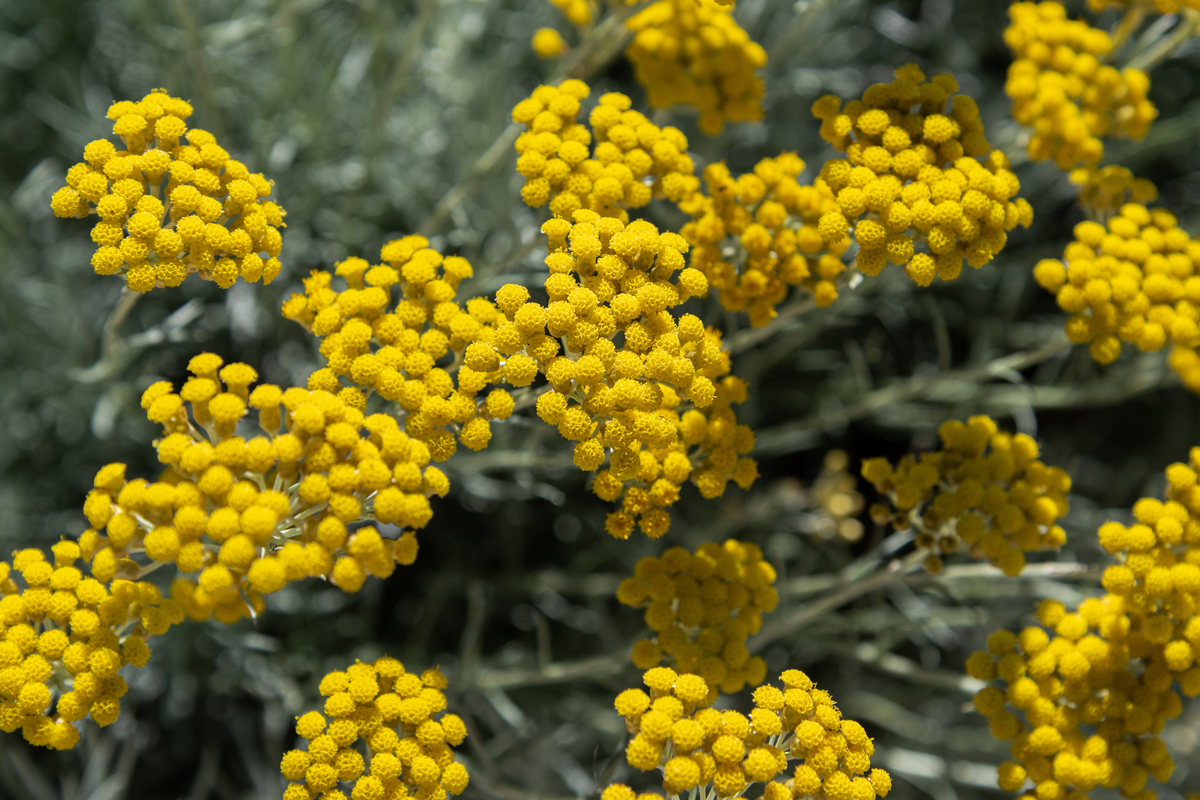
Helichrysum italicum is an aromatic Mediterranean plant that grows across dry, sunny, and windswept landscapes, including Sardinia. It is also known as Immortelle or the Everlasting Flower. For its complete botanical story, explore our guide to Helichrysum, including its names, habitat, scent, history, and skincare preparations.
Helichrysum contains several groups of naturally occurring plant compounds. These include terpenes and phenolic compounds such as flavonoids. Studies of specific Helichrysum oils and extracts have found antioxidant activity in laboratory tests. This research is one reason the plant continues to attract interest in modern skincare.
The preparation still matters. Essential oil, flower water, botanical extract, and infused oil have different compositions and concentrations. Evidence from one preparation does not automatically apply to another preparation or to a finished skincare product.
Benefits of Helichrysum for Sensitive Skin
Sensitive skin often responds best to care that supports comfort without adding unnecessary complexity. This makes the complete formula more important than the reputation of one botanical ingredient.
Helichrysum has a long connection with traditional Mediterranean preparations used for skin exposed to sun, wind, and dryness. Today, researchers are studying specific Helichrysum preparations for antioxidant activity and processes related to skin comfort and the skin barrier.
This combination of traditional use and emerging research helps explain the connection between Helichrysum and sensitive skin. However, Helichrysum is not automatically suitable for every person or every formula. Its role depends on the preparation, concentration, other ingredients, and how your skin responds.
1. Supports Skin Comfort
Sensitive skin is often described through unpleasant feelings such as tightness, stinging, burning, itching, or general discomfort. Redness can also appear, but the way sensitive skin feels is central to how experts define it.
Helichrysum has a long history of topical use in Mediterranean traditions. A scientific review of Helichrysum italicum records traditional preparations used for several skin-related purposes. Researchers have also investigated different Helichrysum preparations for biological activity that may help explain this history. Most of that research is laboratory or preclinical work, so it does not prove that every Helichrysum cosmetic will calm discomfort.
For you, the practical point is simpler. Helichrysum can complement a formula designed around skin comfort. The whole product should feel comfortable in use, fit your skin, and avoid ingredients or routines that you already know trigger discomfort.
2. Supports the Skin Barrier
Your skin barrier is the outer protective layer that helps keep moisture in and everyday irritants out. When this barrier is not working well, skin can feel dry, tight, rough, or more reactive to products and the environment.
One 2023 laboratory study used human skin explants to examine a specific Corsican Helichrysum italicum essential oil and neryl acetate, one of its major components. The study suggests that these materials influenced markers linked with epidermal differentiation, skin lipids, ceramides, and barrier formation.
This evidence is useful because it shows a possible biological relationship between a studied Helichrysum oil and barrier-related processes in human skin tissue. It does not show that every Helichrysum extract, flower water, or cream repairs the skin barrier. A finished product still needs the right ingredients, concentration, stability, and testing to support a formula-level barrier claim.
3. Provides Antioxidant Support
Oxidative stress happens when reactive molecules place more pressure on cells than the body’s protective systems can manage. Sun exposure, pollution, and normal biological processes can contribute to this pressure. Antioxidants help limit reactions involving these unstable molecules.
Studies suggest that several Helichrysum italicum preparations contain compounds with antioxidant activity. A 2023 scientific review describes antioxidant findings across different extracts, essential oils, and laboratory methods. The results vary because growing conditions, plant parts, and extraction methods change the chemical profile of the preparation.
This research supports careful language about antioxidant potential in cosmetic ingredients. It does not mean that any product carrying the Helichrysum name will prevent premature ageing, erase dark spots, protect collagen, or reverse visible damage. Those outcomes require evidence for the specific finished formula.
4. Complements Gentle Formulas
A botanical ingredient does not make a product gentle by itself. Sensitive-skin suitability depends on the full formula, including every ingredient, its concentration, the product’s pH and texture, its stability, and how your skin responds.
This distinction also matters for cosmetic claims. European criteria for cosmetic claims require evidence to match the claim being made. A property associated with one ingredient should not be presented as proof that the finished product has the same property when that has not been shown.
Helichrysum can still be a meaningful part of a comfort-focused formula. The stronger reason to choose a product is the relationship between the Helichrysum preparation and the rest of the formula. Look at the full ingredient list, intended use, directions, and any product-specific testing instead of relying only on the botanical name on the front.
5. Fits a Simple Routine
Sensitive-feeling skin often benefits from consistency. A small number of well-chosen products can make it easier to understand what your skin tolerates. Frequent changes, strong exfoliation, and several new products at once can make that harder.
Helichrysum can fit into a simple routine when the preparation and finished product suit your needs. Start with the product's purpose. A cleanser should clean without leaving skin feeling stripped. A moisturizer should help reduce dryness and support comfort. An oil or balm should add the texture and nourishment your skin needs without making the routine confusing.
Consistency does not mean ignoring your skin. It means giving a suitable routine enough time while noticing persistent discomfort, redness, or other unwanted changes.
A simple routine also makes product evaluation clearer. If you add several products at once, it is hard to know which one improved comfort or caused a reaction. Introduce changes slowly and keep the rest of the routine stable. Notice how your skin feels after cleansing, during the day, and after moisturizing. This does not require a complicated skin diary. A few consistent observations can help you choose products based on your own experience instead of following every new trend.
What Should Sensitive Skin Consider Before Using Helichrysum?
Start by checking which form of Helichrysum the product contains. Pure essential oil is concentrated and is different from flower water, botanical extract, infused oil, or a finished cosmetic product. Do not apply pure Helichrysum essential oil simply because the plant is described as gentle or soothing.
Follow the product directions and introduce new skincare slowly. If your skin is highly reactive, test the product on a small area first when appropriate. Add one new product at a time so you can understand how your skin responds. Stop using it if discomfort or irritation continues or becomes worse.
Botanical ingredients can also cause allergic reactions. One published case report describes allergic contact dermatitis associated with Helichrysum italicum in an emollient cream. A single report does not show how common this reaction is, but it reminds us that natural ingredients are not suitable for everyone.
If you have an ongoing skin condition, a known fragrance allergy, or symptoms that do not settle, ask a qualified healthcare professional for personal guidance.
A tradition rooted in Sardinia
In Sardinia, Helichrysum has never simply been another botanical ingredient. Its warm scent, silver-green foliage, and golden flowers belong to a landscape shaped by sun, wind, and sea. The plant was part of local memory and everyday traditions long before it appeared on a modern skincare label.
For our founder, Giulia Siffu, who was born and raised in Gallura, Helichrysum is a reminder of home. That connection is part of our Sardinian roots. It gives us a cultural relationship with the plant, but we keep tradition and scientific evidence in their proper places. Traditional use tells us how people valued Helichrysum. Research and product testing tell us what a particular preparation or formula can support.
A modern ritual inspired by nature
Sensitive skin deserves thoughtful care, not an endless search for stronger products. At Sarda Zone, we draw inspiration from Sardinia while considering Helichrysum through the lens of modern cosmetic formulation. We consider the preparation, the surrounding ingredients, and the experience of using the complete product.
Our Helichrysum skincare collection brings this botanical into different finished formats for face and body care. These are formulated cosmetics, not instructions to apply pure Helichrysum essential oil. Choose the format that matches where you want to use it, the texture you enjoy, and the level of comfort your skin needs.
Why is Helichrysum good for skin? Research highlights its antioxidant and barrier-supporting activity, while tradition connects the plant to skin comfort. The most reliable choice still comes from the exact preparation, the complete formula, and how well the product suits you.
Helichrysum can support a simple, comfort-focused ritual without promising everything. Because beautiful skin is not about perfection. It is about comfort.
References
1. Viegas DA, Palmeira-de-Oliveira A, Salgueiro L, Martinez-de-Oliveira J, Palmeira-de-Oliveira R. Helichrysum italicum: from traditional use to scientific data. J Ethnopharmacol. 2014;151(1):54-65. PubMed.
2. Furlan V, Bren U. Helichrysum italicum: From extraction, distillation, and encapsulation techniques to beneficial health effects. Foods. 2023;12(4):802. PMC.
3. Lemaire C, Deleu M, Chénais B, et al. Helichrysum italicum essential oil and neryl acetate in human skin explants: effects on epidermal differentiation and barrier-related processes. Cosmetics. 2023. PMC.
4. Misery L, Ständer S, Szepietowski JC, et al. Definition of sensitive skin: an expert position paper. Acta Derm Venereol. 2017;97(1):4-6. PubMed.
5. Foti C, Guida S, Antelmi A, et al. Allergic contact dermatitis caused by Helichrysum italicum contained in an emollient cream. Contact Dermatitis. 2013. PubMed.
6. European Commission. Commission Regulation (EU) No 655/2013 laying down common criteria for the justification of claims used in relation to cosmetic products. EUR-Lex.

Commenta
Questo sito è protetto da hCaptcha e applica le Norme sulla privacy e i Termini di servizio di hCaptcha.