

Article: 5 Daily Habits to Help Relieve Dry, Itchy Skin
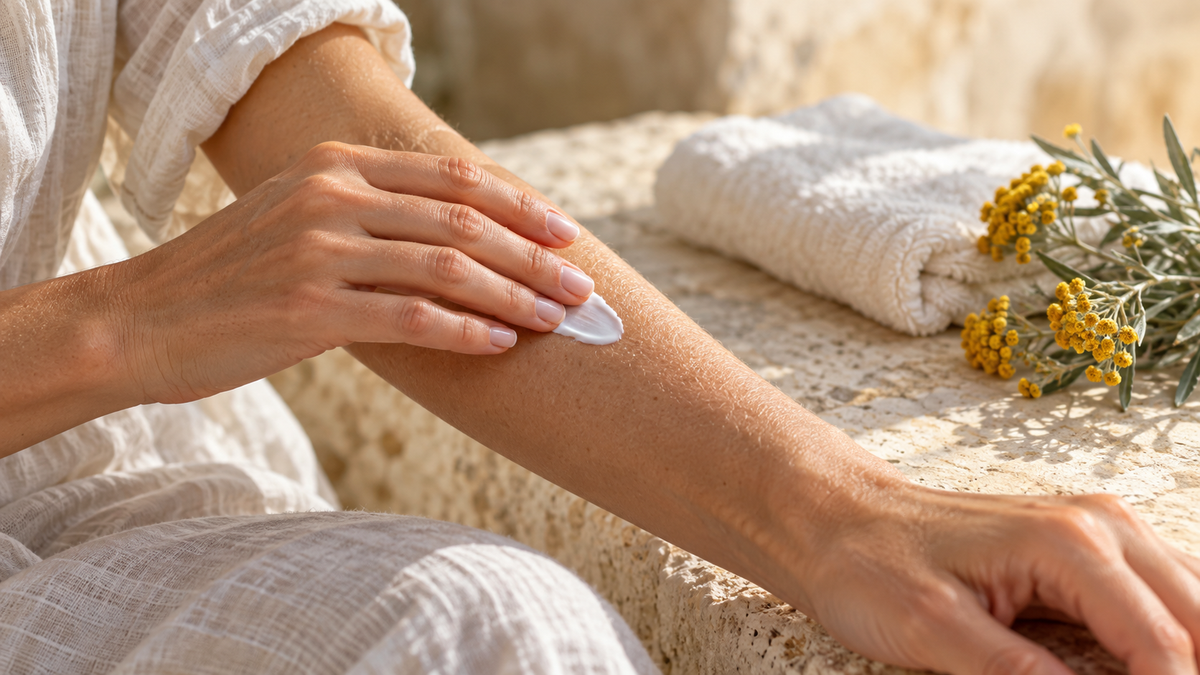
5 Daily Habits to Help Relieve Dry, Itchy Skin
To help relieve dry, itchy skin, take shorter lukewarm showers, cleanse gently, moisturise regularly, keep your skincare routine simple, and reduce scratching and friction. These habits can support everyday comfort when dryness is contributing to the itch.
If your legs feel tight after a shower or your arms itch beneath clothing, start with the parts of your day that touch your skin most often. You do not need a shelf full of new products. You need a routine your skin tolerates and that you can repeat.
This guide focuses on everyday dryness in sensitive or reactive skin. Itching has several possible causes, so persistent or severe symptoms need medical advice rather than more cosmetic layers.
Why can dry skin feel itchy?
Dry skin lacks moisture in its outer layer. When that protective layer is not working well, skin can feel rough, tight or uncomfortable. Hot water, harsh washing and dry surroundings can add to the problem. DermNet explains how dryness and the skin barrier are connected.
Dryness and sensitivity can overlap, but they are not the same thing. If you also notice recurring stinging or reactions to products, our guide to the signs of sensitive skin can help you understand that broader pattern. It does not replace a diagnosis.
Five habits for more comfortable skin
1. Keep showers short and lukewarm
Choose lukewarm water and keep showers to around five to ten minutes. Long, hot showers can dry your skin further, even when they feel relaxing at the time. The American Academy of Dermatology recommends shorter, warm-water bathing for dry skin.
Turn the temperature down before you step in, and keep a soft towel nearby. Afterwards, pat your skin gently rather than rubbing it. If your shins usually feel tight after bathing, changing the shower itself is a useful first step before changing your moisturiser.
2. Cleanse gently instead of scrubbing flakes
Use a mild, fragrance-free cleanser and avoid scrubbing dry areas. Apply enough cleanser to remove dirt without aiming for a thick lather. On the body, focus cleansing where it is needed rather than repeatedly soaping every dry patch.
Flaking can make exfoliation seem tempting, but rough cloths and abrasives can add irritation. Let your fingertips do the washing and rinse carefully. Notice whether your skin feels comfortable afterwards: a tight, squeaky feeling is a reason to review the cleanser and how you use it.
3. Make moisturising part of washing
Apply a suitable moisturiser promptly after washing, and use it again when your skin feels dry. For ordinary dry-skin care, creams or ointments often provide more moisture support than a light lotion. Choose a texture you tolerate comfortably; a thicker product is not automatically better for every area.
General guidance often recommends moisturising while skin is slightly damp, but follow the directions for your chosen formula. NHS guidance on emollients explains how these moisturising treatments help trap moisture and why regular use matters.
For everyday body care, our Helichrysum Body Cream is formulated for dry, delicate or sensitive skin. Its ingredients include glycerin, shea butter, sweet almond oil and Helichrysum flower extract. The product directions specify clean, dry skin, especially after showering.
For selected rough areas where you prefer a richer texture, compare the Helichrysum Body/Face Balm. It contains sweet almond oil, beeswax, Helichrysum extract and vitamin E. You do not need to use both products: choose according to the area, texture and ingredients your skin tolerates.
4. Keep formulas simple and introduce changes gradually
Start with products you already tolerate. Avoid adding several new formulas while your skin is uncomfortable, and pause optional products that sting. If a prescribed treatment seems to be irritating your skin, ask your prescriber before changing it.
Natural ingredients can still cause reactions. Look at the complete formula and your own triggers rather than relying on a botanical name or a short ingredient list. Our guide to natural skincare ingredients for sensitive skin explains how different ingredients contribute to a finished product.
Once your skin has settled, test a new product on a small area before wider use. The AAD recommends applying it to a test spot twice daily for seven to ten days, following the product's normal application instructions. Stop if redness, itching or swelling develops. This home check cannot diagnose an allergy or guarantee future tolerance.
When choosing Sarda Zone products, check the full ingredient list, including sweet almond oil in the cream and balm discussed here. If you have a known almond allergy, ask a healthcare professional before using them.
5. Reduce scratching, friction and everyday triggers
When the itch starts, try gently patting the area or holding a clean, cool damp cloth against it instead of scratching. Keep nails short and smooth. NHS advice on itchy skin recommends these simple ways to reduce skin damage.
Choose loose, soft clothing and notice whether rough fabrics, tight cuffs or scented laundry products make you uncomfortable. Friction from rough clothing and dry indoor environments can aggravate dryness. If heating or air conditioning seems to coincide with symptoms, note that pattern rather than assuming the moisturiser alone is the problem.
A brief note on when the itch appears can be useful: after a hot shower, after applying a product, or beneath a particular garment. Change one everyday habit at a time where practical, so you can see what improves comfort.
When should you seek medical advice?
See a healthcare professional if the itch is severe, affects daily life or sleep, involves your whole body, keeps returning, or does not improve with self-care. Itching during pregnancy also needs advice. A new rash, lump or swelling is another reason to seek an assessment.
Get prompt medical advice for skin that is painful, leaking fluid, developing yellow crusts or showing swelling and discolouration. These can be signs of infection. Cosmetic creams and balms do not treat an infection or replace care for eczema or another underlying condition.
Can face oil replace moisturiser for dry, itchy skin?
An oil can add softness and richness, but it does not offer the same combination of water-containing and water-binding ingredients as a cream. If you want to compare textures, our sensitive-skin routine guide explains the roles of cream, oil and balm, with extra layers kept optional.
Summary
Begin with shorter, cooler showers and gentler cleansing. Make moisturising a regular step, choose formulas carefully, and reduce the friction and scratching that leave skin feeling worse. If symptoms persist, seek advice about the cause.
At Sarda Zone, Sardinian Helichrysum is at the heart of our skincare for dry, sensitive and reactive skin. If you are considering botanical care, explore our guide to Helichrysum for sensitive skin, then compare the full formulas in our Helichrysum skincare collection. Choose care that fits your skin, without adding steps you do not need.


Leave a comment
This site is protected by hCaptcha and the hCaptcha Privacy Policy and Terms of Service apply.